
How Can I Preserve Muscle While Losing Weight on a GLP-1?

To reduce muscle loss while using a GLP-1 weight-loss medication, pair sufficient protein with regular full-body resistance training, keep aerobic work realistic when appetite is low, and treat nausea, dizziness, or severe fatigue as signals to adjust and seek clinical guidance when needed. Weight loss includes lean mass as well as fat, so scale loss alone is not the win condition.
Do Wegovy and Zepbound cause muscle loss as well as fat loss?
Yes. Weight loss with these medicines can include loss of lean mass as well as fat mass, but lean mass is not identical to skeletal muscle.
In the 2021 STEP 1 DXA substudy published in the Journal of the Endocrine Society, participants taking semaglutide had lower total fat mass and lower total lean body mass after treatment. The study reported a 15.0% reduction in baseline body weight over 68 weeks with semaglutide, while total lean body mass decreased by 9.7%; fat loss was substantially larger, and lean mass represented a greater share of body weight at the end.
The pattern is not unique to semaglutide. In the 2025 SURMOUNT-1 DXA substudy in Diabetes, Obesity and Metabolism, pooled tirzepatide doses reduced body weight by 21.3% over 72 weeks; approximately 74% of lost weight was fat mass and 26% was lean mass. That is progress in body composition, not a reason to ignore the lean-mass part of the equation.
Here is the useful reframe: do not treat every pound lost as interchangeable. The 2024 Obesity Reviews review notes that lean-mass measurements also include fluids, organs, and other non-fat tissue. Strength, daily function, food intake, symptoms, and clinician-led assessment fill in the information that a scale cannot provide.
What strength exercises should I do while taking a GLP-1 medication?
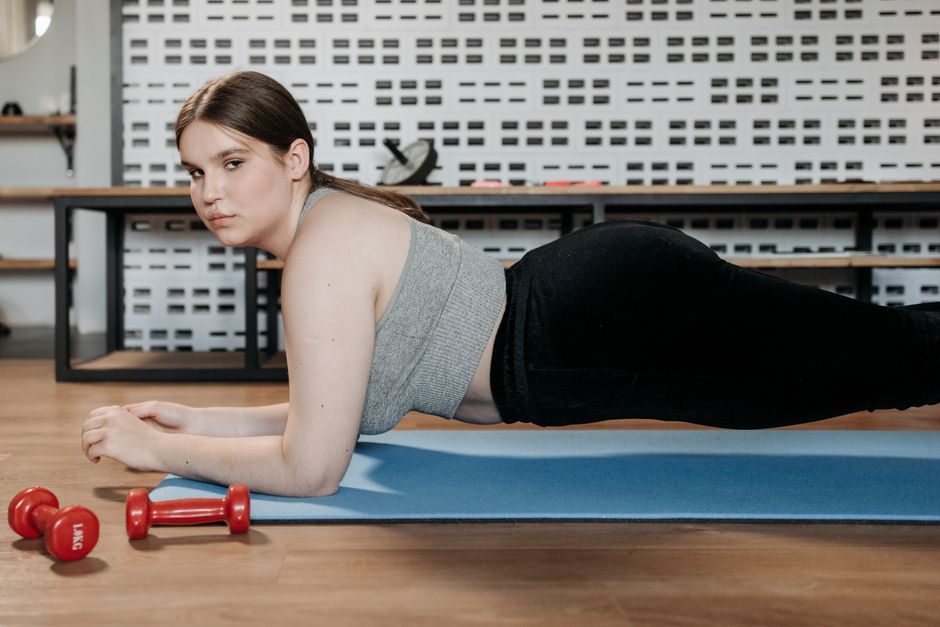
A practical starting point is a full-body routine that trains the major muscle groups with movements you can perform safely and repeat consistently.
The common mistake is chasing a punishing workout while appetite and energy are changing. That is a waste of recovery capacity. The 2025 joint advisory from the American College of Lifestyle Medicine, American Society for Nutrition, Obesity Medicine Association, and The Obesity Society recommends regular strength training at least three times weekly, individualized to fitness and physical capacity. The CDC adult guidance also identifies legs, hips, back, chest, abdomen, shoulders, and arms as the major groups to include.
| Movement pattern | Beginner-friendly options | What it covers |
|---|---|---|
| Squat or sit-to-stand | Chair sit-to-stand, body-weight squat | Legs and hips |
| Push | Wall push-up, incline push-up, resistance-band press | Chest, shoulders, arms |
| Pull | Resistance-band row, supported row | Back and arms |
| Hinge | Light hip hinge or supported deadlift pattern | Hips and back |
| Core and carry | Supported plank, suitcase carry with an appropriate load | Abdomen, grip, posture |
According to the CDC adult guidance, one set of 8 to 12 repetitions is a starting point, and two or three sets can provide added benefit; its guidance was current in 2026. The same page says muscle-strengthening work should reach the point where another repetition is difficult without help. Technique, pain, balance limitations, and clinical restrictions change the exercise choice, so qualified coaching can be valuable for a first program.
Use strength and function as progress markers: smoother chair rises, more controlled rows, a heavier safe load, or a longer walk without needing to stop. The scale can move while performance improves, stalls, or declines. Those are different stories.
How much protein do I need to preserve muscle on semaglutide?
The evidence-based target discussed in the 2025 joint advisory is 1.2 to 1.6 grams of protein per kilogram of body weight per day during active weight reduction, with an 80 to 120 grams-per-day range offered as a practical alternative.
That is not a command to force food when nausea is active, nor a license to turn protein into a numbers contest. The same 2025 advisory states that the adult protein RDA is 0.8 grams per kilogram per day, flags intake below 0.4 to 0.5 grams per kilogram per day as a risk for muscle atrophy and functional impairment, and advises against prolonged intake at or above 2 grams per kilogram per day because of potential adverse effects.
The central point is blunt: protein powder cannot do the work of training. The advisory says increased protein alone is likely inadequate to preserve muscle without structured resistance training. When appetite is low, smaller protein-containing meals or snacks that fit tolerated foods can make the day more manageable; a prescribing clinician or registered dietitian can tailor this to medical history, kidney concerns, food tolerances, and total intake.
Do not let perfect become the enemy of adequate. Log what is actually tolerated for several days, bring that record to the care team, and use it to identify the real bottleneck: low appetite, food aversion, nausea, scheduling, or a plan that asks too much at once.
Why do I have no energy for the gym after my weight-loss injection?
Low energy after an injection can reflect reduced food intake, gastrointestinal symptoms, dehydration, or medication-related fatigue and dizziness, so hard training is not automatically the right response.
The 2025 Wegovy prescribing information from the U.S. Food and Drug Administration lists nausea, diarrhea, vomiting, constipation, abdominal pain, fatigue, and dizziness among common adverse reactions. It also warns about acute kidney injury due to volume depletion and directs clinicians to monitor renal function when adverse reactions could lead to volume depletion.
Here is how to keep the plan practical: on a tolerable day, complete the planned full-body session; on a low-fuel day, reduce load, volume, or duration; on a day with meaningful dizziness, severe fatigue, or persistent vomiting or diarrhea, pause the workout and contact the prescribing team for advice. This is not weakness. It is risk management.
Pre-workout fueling does not need to become a production. A tolerated meal or snack containing protein and carbohydrate, plus fluids, can be easier to manage than arriving underfed and trying to force intensity. The research sources do not establish one universal food choice or injection-day workout schedule, so symptom patterns and clinician guidance decide the details.
Recovery belongs in the plan, too. When life feels overpacked, protect the lower-pressure parts of recovery rather than treating them as optional; the same principle behind planning a restorative 48-hour getaway near home applies to training weeks that need more recovery, not more punishment.
Frequently Asked Questions
Can I build muscle while taking Ozempic or Mounjaro?
The available sources establish that lean mass can decline during medication-associated weight loss, not that every person will build muscle. The 2025 joint advisory says increased protein alone is likely inadequate without structured resistance training, so strength practice and overall food intake are the relevant factors to discuss with a qualified clinician or dietitian. Track functional progress alongside body weight rather than assuming the scale tells the whole story.
Should I schedule hard workouts around my injection day?
The provided sources do not establish a universal workout schedule around injection day. The 2025 Wegovy prescribing information lists nausea, fatigue, and dizziness among common adverse reactions, so the practical decision depends on symptoms and clinical advice rather than a fixed calendar rule. A lower-intensity session or rest can be more appropriate when symptoms interfere with safe training.
Is walking enough exercise while I am losing weight on a GLP-1?
Walking can contribute to aerobic activity, but it does not replace muscle-strengthening work when preserving muscle is the goal. The CDC adult activity guidance calls for aerobic activity plus muscle-strengthening activity involving major muscle groups, and the 2025 joint advisory specifically emphasizes structured strength training during GLP-1 treatment. Combining both addresses different parts of the problem.
Sources
- Journal of the Endocrine Society: STEP 1 semaglutide DXA substudy
- Diabetes, Obesity and Metabolism: SURMOUNT-1 tirzepatide DXA substudy
- American Journal of Clinical Nutrition: Joint Advisory on nutritional priorities with GLP-1 therapies
- Centers for Disease Control and Prevention: What Counts as Physical Activity for Adults
- U.S. Food and Drug Administration: Wegovy Prescribing Information
- Obesity Reviews: Strategies for minimizing muscle loss during incretin-mimetic treatment
Disclaimer: This article is for general information only and is not medical advice. It is not a substitute for diagnosis or treatment by a qualified healthcare professional. Always speak to your doctor before acting on anything you read here.
Keep reading
Can I Lose 10 kg in 7 Days?
An evidence-based look at why 10 kg in a week is not realistic fat loss and how to begin a safer seven-day reset.