
What Is the Average Investment Portfolio for Someone My Age?
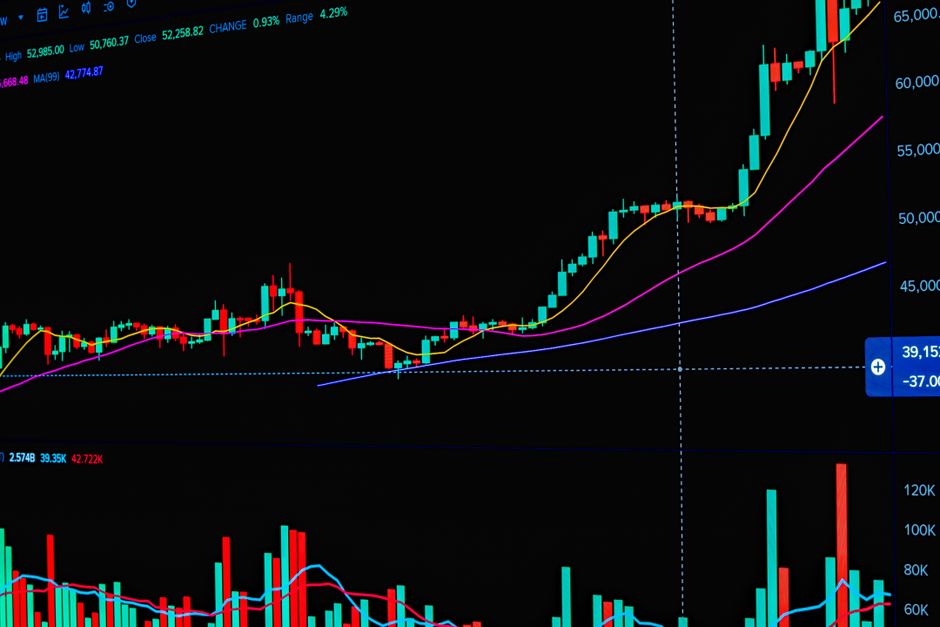
There is no useful single “average portfolio” for your age: averages are pulled upward by high-wealth households, and the right stock, bond, and cash mix depends on your timeline and risk tolerance. Use age-based data as a reality check, not an instruction. Compare your own accounts, emergency cash, debts, and goals before treating a peer benchmark as a target.
What is the average investment portfolio for someone my age?
The honest answer is that an average portfolio is a poor stand-in for a typical one. In the Federal Reserve’s 2022 Survey of Consumer Finances, families holding financial assets had a median of $39,000 and a mean of $511,300. That gap is the point, not a footnote: a smaller group with very large holdings pushes the mean far above what sits in the middle.
Do not turn someone else’s large balance into evidence that you are behind. The same 2022 Federal Reserve survey found that retirement-account holders had a median balance of $86,900 and a mean balance of $334,000, while 54.3% of families held a retirement account. Those are ownership and balance benchmarks, not a checklist for what a household of a particular age must have.
Age data are more useful when they answer a narrow question. The Federal Reserve reported retirement-account ownership of 49.6% for households whose reference person was under 35 in 2022, 61.5% for ages 35–44, 62.2% for ages 45–54, 57.0% for ages 55–64, and 51.0% for ages 65–74. Ownership does not reveal whether the money is invested for a near-term goal, retirement, or parked in cash, so it cannot tell you what allocation fits your life.
| 2022 comparison point | What it shows | What it cannot tell you |
|---|---|---|
| Median financial assets: $39,000; mean: $511,300, Federal Reserve, 2022 | Average wealth is heavily skewed upward. | Whether your balance is enough for your goals. |
| Transaction-account median: $8,000; mean: $62,500, Federal Reserve, 2022 | Cash balances also vary sharply. | How much cash is appropriate for your household. |
| Average workplace-plan equity allocation: 75%, Vanguard, 2024 | Workplace-plan participants often held substantial equity exposure. | An age-specific allocation for all Americans. |
That last distinction matters. Vanguard’s 2025 How America Saves report covers nearly 5 million defined-contribution-plan participants and reports 2024 plan data, not every U.S. household. Its average participant account balance was $148,153 in 2024, while the median was $38,176 in 2024. Different population, same warning: the average can be a distorted benchmark.
Here is the practical move: separate cash needed for emergencies and short-term plans from money intended for long-term investing. A planned expense, including a restorative 48-hour getaway near home, belongs in the short-term column rather than being judged against a retirement-account benchmark. Mixing those buckets creates a comparison that looks precise but answers nothing useful.
How much of my portfolio should be in stocks at age 30, 40, 50, or 60?
No source in this dossier supplies a defensible stock, bond, cash, and alternatives percentage for every investor at ages 30, 40, 50, or 60, and age alone cannot supply one. The U.S. Securities and Exchange Commission defines asset allocation as dividing investments among stocks, bonds, and cash, and states that the decision is personal because it changes with time horizon and risk tolerance.
The common belief is that a birthday gives an allocation answer. But the truth is less tidy: money needed sooner can call for less volatility, while a longer time horizon can allow more volatility, according to the SEC. Two people at the same age can therefore reach different, evidence-consistent allocations if their goals and ability to stay invested through market swings differ.
Available benchmarks describe behavior, not a prescription. Vanguard reported that its defined-contribution-plan participants held an average of 75% in equities in 2024 and that 42% of plan assets were in target-date funds in 2024. It also reported that 78% of participants had a balanced strategy in 2024. Those numbers describe a workplace-plan population; they do not account for your cash reserve, debts, home equity, pension coverage, or other assets outside that plan.
Here is how to use the benchmark without letting it run the show:
- List each account and identify its job: near-term spending, emergency cash, or long-term investing.
- Write down when each pool of money is expected to be used. The SEC identifies time horizon as a core allocation factor.
- Check whether market gains have changed your risk exposure. The SEC illustrates how a 60% stock allocation can become 80% after gains, which is a change in risk rather than proof that the new mix is right.
- Compare the resulting mix with a benchmark only after the first three steps. A peer average is context; it is not permission to ignore your own timeline.
Target-date funds offer one example of a process rather than a universal answer. The SEC notes that they generally rebalance to become more conservative as the target date approaches. That structure can be useful to evaluate, but its fit still depends on the target date and the investor’s situation.
Should I compare my portfolio to the average American's portfolio?
Compare your portfolio to the average American’s only to understand the data, not to choose investments or grade your progress. The average blends households with different incomes, debts, pensions, home equity, account access, and savings goals, then adds the mathematical distortion created by very large balances.
The Congressional Research Service, using the Federal Reserve’s 2022 Survey of Consumer Finances, reported that 54.3% of U.S. households had retirement-account assets in 2022. It also reported that retirement-account balances include defined-contribution plans and IRAs, but exclude defined-benefit pension payments and Social Security. A retirement-account comparison is therefore incomplete before it even reaches the question of asset allocation.
Use the median before the mean when you need a population reference, then ask what is missing. Home equity is not a retirement account. Emergency savings are not automatically investment capital. A pension can affect retirement income without appearing in the account-balance figure. The Congressional Research Service analysis makes this boundary clear, and it prevents a familiar rookie mistake: comparing one account to another household’s entire financial picture.
Cash deserves its own check, too. The Federal Reserve found that 98.6% of families held transaction accounts in 2022, with an $8,000 median balance among holders and a $62,500 mean balance among holders. Neither number establishes a required emergency reserve. It shows why a broad average is a blunt instrument when cash can serve many jobs.
One more trap is worth naming. In Vanguard’s analysis, 28% of IRA rollovers initiated in 2015 stayed entirely in cash through year-end 2022. Vanguard attributes part of this pattern to IRA contributions often arriving as cash until an owner chooses investments, unlike many workplace plans with investment defaults. Cash on a statement may reflect an uncompleted decision rather than a deliberate allocation.
Finish with a small, concrete audit: label what each dollar is for, note when it is needed, and identify whether your current mix still matches that purpose. That is more useful than chasing an average that was never designed as a personal recommendation.
Frequently Asked Questions
Why do younger investors hold so much cash instead of investing it?
Cash can persist because of account design, not necessarily because an investor deliberately chose it. Vanguard found that 28% of IRA rollovers initiated in 2015 remained entirely in cash through year-end 2022, and it identifies cash as the default destination for many IRA contributions until the owner selects an investment. Its analysis also says younger investors, women, and investors with smaller balances were especially likely to leave rollover assets in cash for years.
Does asset allocation need to become more conservative with age?
Age can shorten the time available to recover from market volatility, but it does not automatically dictate one correct allocation. The SEC says allocation is personal and changes with time horizon and risk tolerance; target-date funds generally become more conservative as their target date approaches. A comparison should therefore start with when the money is needed and how much volatility the investor can tolerate, not a birthday-based rule.
Sources
- Federal Reserve Board, Survey of Consumer Finances
- U.S. Securities and Exchange Commission, Asset Allocation
- Vanguard, How America Saves 2025
- Vanguard Policy Research, Improving Retirement Outcomes by Default
- Congressional Research Service, Distribution of Retirement Account Balances
Disclaimer: This article is for general information only and is not financial advice. It does not take your personal circumstances into account, and past performance does not predict future results. Speak to a licensed financial professional before making money decisions.